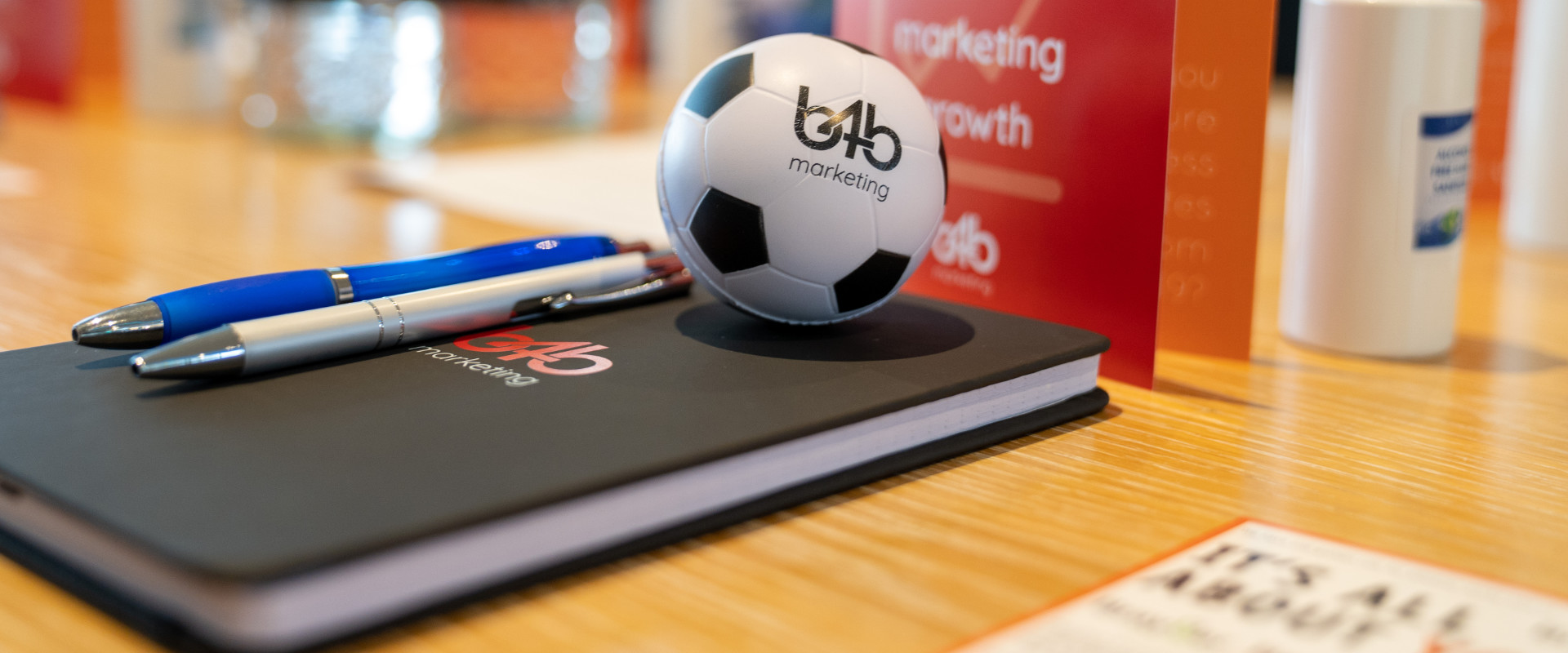
Spend any time at a trade show, and the problem becomes obvious. Branded merchandise piles up at the end of every stand, including pens, stress balls, and USB sticks; most of which go home with nobody. The businesses that ordered it will never know whether a single recipient remembered the logo a week later, because the items weren't chosen with retention in mind.
Promotional products for UK businesses work when they're chosen for utility, matched to context, and produced at a quality that reflects the brand rather than contradict it:
- They solve a genuine, repeated need, so drinkware, apparel, and tech accessories lead on retention for exactly this reason.
- They fit the moment, because event giveaways and client gifts require different briefs, not the same catalogue page.
- They match the brand, because the item and the logo make the same impression at the same time.
This guide covers the categories that perform, the contexts that change the decision, and what's shifted in the market this year.
Why Most Promotional Products Get Thrown Away
Most promotional merchandise fails for one reason. Nobody needed it in the first place. Nine in ten consumers recall branding from a promotional product when given options, but only when the item was retained, according to a Promotional Products Association International (PPAI) 2016 Consumer Study [1].
The UK promotional products market reached £1.232 billion in 2024, up 4.2% on the previous year. What the headline figures do not capture is the retention question. Utility is the primary driver of whether a branded item gets kept. Items that solve a practical problem get used; items that do not get discarded, regardless of spend [2].
A well-chosen item costs more per unit and earns it back because it gets used. A cheaper item ordered in volume that ends up in landfill does not.
What Promotional Products Actually Work for Your Business
The difference between a high-recall item and a bin candidate comes down to fit, not category. Drinkware, bags, apparel, and tech accessories lead on retention, not because they are fashionable choices, but because they solve genuine, repeated needs.
Each category performs differently by context, and that distinction most merchandise guides flatten into a single undifferentiated list:
- Drinkware sits on desks, travels to meetings, and stays in use for months. Daily frequency means extended logo exposure with no additional spend.
- Apparel worn outside the workplace multiplies impressions in a way no other category can match, provided the quality is right.
- Tech accessories carry high perceived value and get kept because they solve a real problem.
- Bags and totes are the perennial event staple, practical, visible in public, and increasingly expected in eco-variants.
- Pens and stationery remain appropriate for high-footfall events where cost-per-impression matters more than longevity.
What Your Merchandise Budget Should Actually Be Buying
Event-context merchandise and client gifting are not the same decision and treating them as one is where most budgets go wrong. At a trade show, the objective is impression volume. Cost-per-item matters; quantity is the mechanism, and pens, totes, and low-cost branded items serve that purpose well. Client gifts are a different calculation.
A client gift is a brand touchpoint, not a giveaway.
The objective is to stay in the recipient's daily life, which means drinkware, quality apparel, or tech accessories will outperform a branded pen every time, because the pen goes in a drawer and the mug goes on the desk. For branded workwear in particular, our authorised supplier status with Helly Hansen means the quality argument is backed by a name the recipient will recognise.
The Eco Products Shift
Eco-friendly merchandise is now a business-case decision, not a values statement alone. Sourcing City data from 2024 recorded eco-friendly ideas as the top themed product search phrase on its platform, which means buyers are actively seeking sustainable options.
Reusable drinkware, recycled tote bags, and sustainably sourced stationery now sit at the mainstream end of the catalogue. A well-made, sustainable item carries more perceived value and lasts longer than a cheap plastic equivalent.
Choose Merchandise That Fits Your Brand
The safest promotional product is the one that makes the recipient think of your business every time they use it, and that only happens when the item, the quality, and the context are all right. There are 5.7 million SMEs in the UK as of January 2025, which means businesses whose merchandise gets kept have a sustained visibility advantage over those whose items get discarded [3].
The brand coherence test is the one most businesses miss. If a business invests in a premium rebrand and then hands out the cheapest pen at its next trade show, those two things are sending different signals to the same audience. Merchandise belongs in the same conversation as the logo, the website, and the way the reception area looks, not in a separate procurement decision.
Distribution context matters as much as product choice. A well-chosen item given at the wrong moment performs worse than a simpler item given at the right one. Cold outreach is the wrong moment. After a meeting, at an event, or at a client milestone is the right one. For businesses with a trade show or exhibition presence, the stand and the items handed out from it should tell the same story. Exhibition stand design and merchandise selection belong in one brief.
Choose Merchandise That Gets Used, Not Just Given Away
When the buying decision starts with the catalogue rather than what the recipient actually needs, the default outcome is items that get binned, not remembered. The businesses whose merchandise ends up on desks and in daily bags aren't spending more; they're buying differently, matching utility to context and quality to brand.
Choose for use, not volume:
- Drinkware, apparel, and tech accessories lead on retention because they solve real, repeated needs.
- Event merchandise and client gifts are two separate briefs; treat them as one, and you underspend on both.
- A cheap item and a premium rebrand send different signals to the same audience at the same time.
b4b's Promotions team handles promotional merchandise selection as part of a broader brand conversation, not as a standalone procurement decision. The range covers branded workwear, including an authorised Helly Hansen supplier partnership, exhibition stand merchandise, bespoke packaging, and the full promotional catalogue, with strategy-led sourcing across every category.
If you are ready to see what will work for your audience, speak to our Promotions team on 01202 684400 or via our contact page.
External Sources
[1] Promotional Products Association International (PPAI), Nine in 10 Consumers Remember Branding on Promotional Products, Study Finds (2017):
[2] Images Magazine, Mark Ludmon, Record Sales for UK's Promotional Product Sector (2025):
[3] GOV.UK, House of Commons Library, Annalise Murray, Business Statistics (2026):