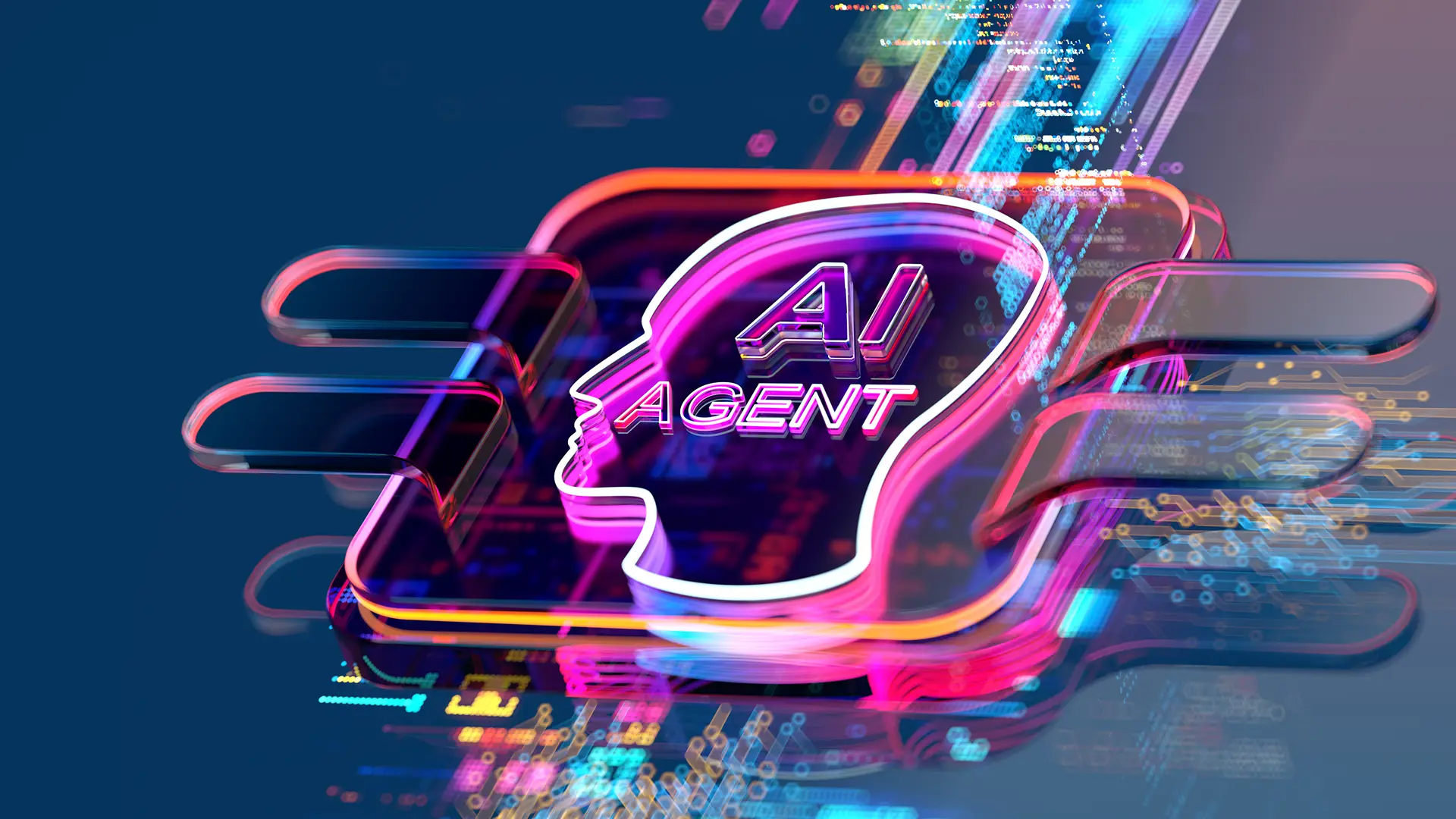
Agentic AI is moving from technology headlines into everyday business conversations, yet the term rarely comes with a clear explanation. Put simply, it's software that takes a goal, plans the steps, carries them out and checks its own work without being prompted at every stage. That's what sets it apart from a chatbot, which waits for questions, and from a script, which repeats fixed instructions.
It's arriving just as AI automation becomes routine, with around 3 in 10 UK businesses (30%) reported as using at least one type of AI technology in September 2026, up from 9% in 2023, according to the Office for National Statistics [1]. So, what is agentic AI, and why does it feel like a step change rather than another tool?
What Is Agentic AI? A Plain-English Definition
Think of two colleagues. The first needs precise instructions at every step and stops the moment something unexpected happens. The second takes a brief, works out how to meet it, gets on with the job and tells you when it's done. Agentic AI behaves like the second colleague. You give it an outcome, such as booking a customer's job, and it decides the steps, uses the systems it's connected to and adjusts if things change.
The word "agentic" simply points to agency, referencing the ability to act towards a goal rather than just respond to a prompt. That doesn't mean it runs without limits. In fact, good agentic systems work within boundaries you set, such as what they can access and when a person should step in.
Hold on to that picture, because it explains most of what follows, starting with how it differs from tools you already use.
How Agentic AI Differs from a Chatbot or a Script
A script is the simplest of the three. It follows rules written in advance, so it's perfectly reliable for task automation such as copying an order into an accounting system, but it can't cope when an order arrives in a format nobody planned for, and it simply stops when an exception appears. A chatbot is more flexible in conversation, yet it still responds to prompts and rarely does anything beyond answering them. It can explain your booking process beautifully without ever making a booking.
So, what is agentic AI doing that the other two can't? Basically, it pursues a goal. If its first route fails, it tries another, weighing up its options through AI decision making rather than following a fixed branch of if-this-then-that rules.
In short, a script follows, a chatbot replies, and an agentic system works towards an outcome.
How Does Agentic AI Actually Work?
That outcome-first behaviour sounds almost too convenient, so it helps to look under the bonnet. Behind the scenes, the answer to 'what is agentic AI actually built from?', typically comes down to a language model that does the reasoning, connected to your business systems so it can act as well as answer. These components are often called AI agents, and each one repeats a simple loop. Strung together across several steps and systems, that loop produces autonomous workflows that can run a job from request to completion.
This looks a little something like this:
- Understand the Goal: The agent interprets the outcome you want, such as booking a service visit, and the limits it must work within, such as budgets and permissions.
- Plan the Steps: It breaks the goal into actions, such as checking availability, choosing an engineer and notifying the customer.
- Act Through Connected Tools: It carries out those actions in your calendar, CRM or booking software rather than only describing them.
- Check the Result: It confirms the outcome, then retries, or hands over to a person with the details already gathered, if something hasn't worked.
Those four stages are easier to grasp with a real job to follow, so let's walk through one.
What Does Agentic AI Look Like in Practice?
Imagine a customer emails at 4:45 pm on a Friday asking for a site visit early next week. In a traditional setup, that message would sit until Monday. An agentic system reads it, works out what's being asked, checks engineers' diaries and parts stock, chooses a suitable slot and books it. It then sends the customer a confirmation, updates the job record and gives the engineer the context they need, all without anyone prompting it.
The more interesting moment comes when something changes. Suppose the chosen engineer is pulled onto an emergency call an hour later. Rather than failing quietly, the system uses AI decision making to weigh the alternatives. It could assign it to a different engineer, change the day, or choose a later time that suits the customer. It rebooks, explains why the time moved and logs the change. Where it can't resolve a clash within the rules it's been given, it flags it to a person with the details already gathered, so nobody starts from scratch.
That's business process automation with judgement built in, handling the whole journey from enquiry to confirmed visit and freeing your team for the conversations that genuinely need them.
Is Agentic AI Right for Your Business? How b4b Can Help
Seeing a process run like that naturally raises the question of whether your own operations are ready for it. The Office for National Statistics found that among UK businesses with 10 or more employees that use at least one AI technology, only 10% report using AI extensively, so there's plenty of room to go deeper [2].
A process usually suits agentic AI when:
- The work follows several steps across more than one system.
- The routine is repetitive, but exceptions still need judgement.
- Delays or manual hand-offs are costing you leads, time or customer goodwill.
At b4b, our in-house AI and software teams build bespoke agentic AI systems around your own processes and connect them to the tools you already use, so your business process automation fits how you work.
We'll also tell you honestly where it isn't the right fit.
Let's Map Out Where Agentic AI Could Work for You
Agentic AI isn't a smarter chatbot. It's software that takes a goal, plans, acts and checks its own work, and it pays off most where processes are multi-step and time-sensitive. If you'd like to see where it could fit, call us on 01202 684400 or send a message through our contact form, and we'll talk it through with you.
We'd love to show you what's possible with agentic AI systems built around the way you work.
External Sources
[1] Office for National Statistics, Business Insights and Impact on the UK Economy: 8 October 2026
[2] Office for National Statistics, Artificial Intelligence in UK Businesses: 2023 to 2026