
Thinking of starting a podcast? Then you’ll need to decide on a format, and this is a choice that carries more weight than you might realise. The right podcast depends on what you want it to achieve. While a solo host builds authority, a conversation builds connection, and a panel builds community. So long as you match the shape of the show to your goal, guests, scripts, budget, etc., everything else becomes a lot easier.
Plenty of businesses start recording before settling this question, then wonder why the show never quite finds its voice. Knowing how to choose a podcast format early saves months of rework, and it turns brand storytelling from a vague ambition into something you can plan around. So, what are the options, and what does each one do best?
What Are the Main Podcast Format Types?
Before comparing them, it helps to see the landscape. Most business shows fall into three podcast format types, and each one asks something different of the people involved:
- Solo: A solo podcast puts one host in front of the microphone, speaking directly to the listener with no one else to share the load.
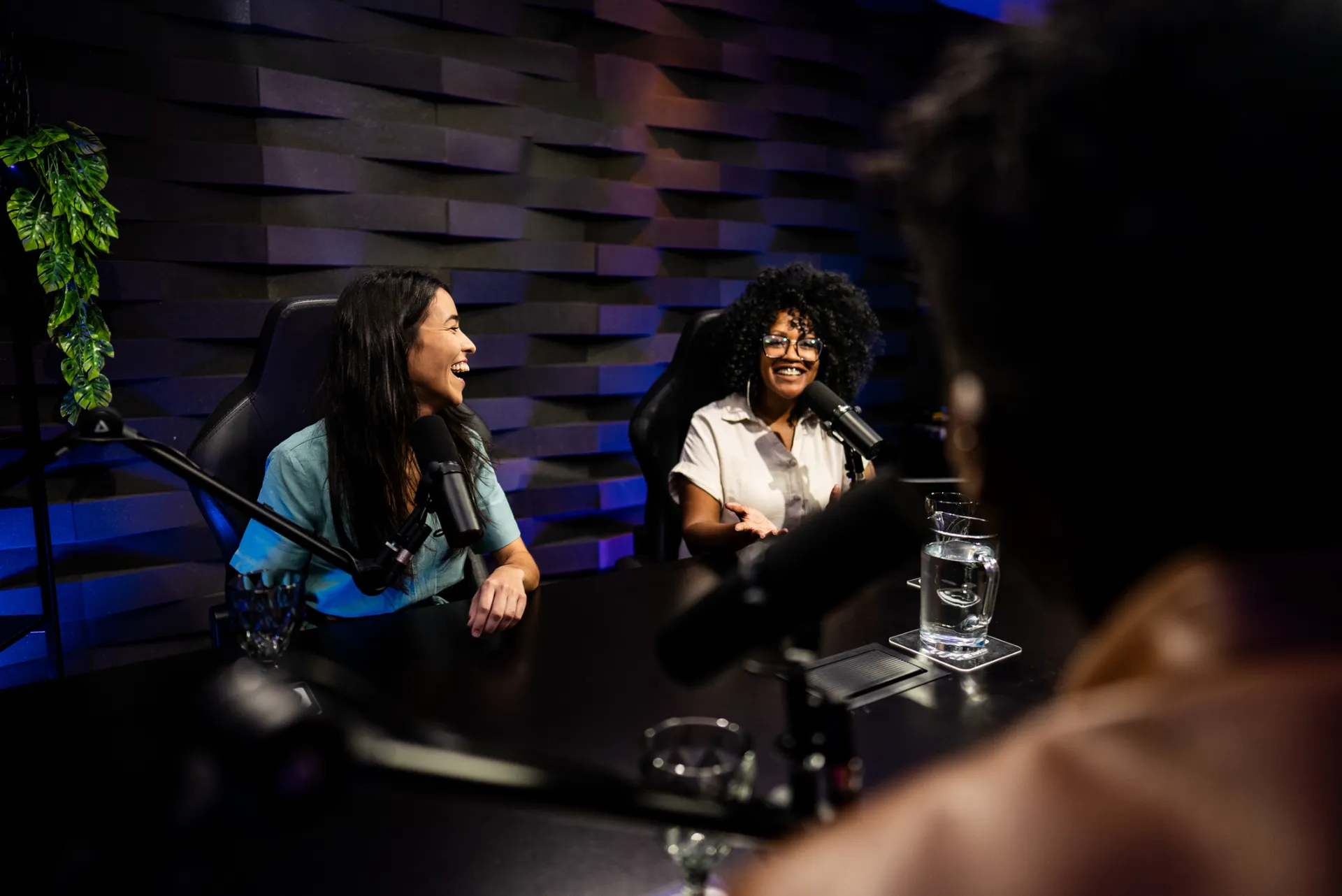
- Interview or Co-Hosted: One host steers the conversation with a guest, or two regular hosts share the microphone every episode.
- Panel: A panel podcast brings three or more voices together to discuss a theme, with a host keeping the conversation on track.
None of these is better than the others in the abstract. What separates them is the preparation they demand, the authority they build, and how much rests on one person’s availability. That’s why the simplest of the three, where one voice carries everything, is the best place to begin.
Solo Podcasts: One Voice, Total Control
When one voice carries everything, the show becomes an extension of the person behind it. A solo podcast gives you complete control over the message, the pacing and the schedule, with no guest availability to chase and no editing around someone else’s tangents. It also suits brand storytelling well, because a single host can build a consistent narrative across episodes, returning to the same themes until listeners associate them with you.
That control comes at a price. Of all the podcast formats, this is the one that leaves the host most exposed as there’s nobody to bounce an idea off, nobody to fill a pause, and nobody to share the weight when a busy month arrives. It works best for founders and specialists who are comfortable speaking at length and have enough genuine expertise to keep episodes fresh.
Interview and Co-Hosted Podcasts: Borrowing Perspective and Building Community
A second voice changes the dynamic immediately. In an interview show, a guest brings their own audience, their own credibility and a fresh angle, which is a quick route to reach beyond your existing followers. A co-hosted podcast offers something different, with two regular voices who build a rapport over time, so listeners return for the relationship as much as the topic. Compared with other podcast formats, these two feel the most like a conversation, which is why they’re so good at building community.
The trade-off is preparation. Good podcast content planning matters far more here, because chemistry doesn’t happen by accident. Guests need briefing, co-hosts need a shared structure, and someone has to keep the conversation on track without making it feel scripted. Get that balance right and the show feels effortless.
Panel Podcasts: Many Voices, One Conversation
When more voices join in, the show stops being a conversation and becomes a discussion. A panel podcast brings together several perspectives on one theme, which makes it a natural fit for industry roundtables, customer forums or internal experts debating a topic from different angles. Listeners gain a rounded view they couldn’t get from a single speaker, and each panellist tends to share the episode with their own network, which can widen your reach considerably.
The challenge sits behind the scenes. Scheduling several diaries is difficult, and the recording needs a confident host who can give everyone space without letting one voice dominate. Without that, a panel can quickly drift into several monologues taking turns. Among the podcast formats on offer, this is the most demanding to produce, and it rewards businesses with the time and resources to do it properly.
How to Match a Format to Your Business Goals
Seen side by side, the three shapes each solve a different problem. The most reliable way to decide is to start with what you want the show to achieve, then work backwards:
- Thought Leadership: A solo host or a well-chosen interview series positions you as the authority.
- Community Building: A co-hosted podcast or a panel creates an ongoing conversation that listeners feel part of.
- Telling Your Brand’s Story: A single narrator gives you the most control, while guests add voices that bring your values to life.
Practical limits matter just as much as ambition. Be honest about the time, budget and in-house capacity you can commit, then build your podcast content planning around what you can sustain. Whichever of the podcast formats you lean towards, consistency counts for more than complexity. Settling on a format is only the first step, because a show needs more than a good idea.
Turning Your Chosen Format into a Show with b4b
Choosing a podcast format gets you to the starting line, not the finish. Whichever of the podcast format types you choose, the show still needs recording, editing, publishing and promoting, and it needs to sit inside a wider business podcast strategy, so every episode supports your leads and visibility.
At b4b, our in-house media team produces podcasts from our own studio, while our marketing and web teams make sure the right people hear them. Because it all sits under one roof, your podcast works as part of your growth plans rather than a separate project.
Find the Format That Fits Your Brand
Solo builds authority, interview and co-hosted shows build credibility and community, and panels build a sense of belonging. The right choice depends on your goals, your capacity and the story you want to tell. If you’d like help weighing up the podcast formats open to you, call us on 01202 684400 or use our contact form, and we’ll talk through what would suit your brand.
Choose the format that fits, and the rest of your show has a firm foundation.